Desires to obtain pain of it because it is pain but occasionally circum We work with a passion of challenges
Get UPdate

p
Talk with us 9925199015
Heavy Duty XLPE/PVC Industrial Power Cables

Heavy Duty XLPE/PVC Industrial Power Cables

Allcab Domestic Cables are engineered with precision using superior quality materials and modern technology to deliver safe, efficient, and long-lasting electrical performance. Designed for residential, commercial, and industrial applications, our PVC and XLPE cables ensure reliable power distribution with enhanced durability and protection.


PVC Insulated Cables

Construction of PVC Cables

  • Conductor: High conductivity electrolytic grade copper or aluminium
  • Conductor Type: Solid / Stranded / Flexible
  • Insulation: Premium grade Polyvinyl Chloride (PVC) compound
  • Core Identification: Standard colour coding
  • Outer Sheath: PVC (optional)
  • Voltage Grade: Up to 1100 Volts


Applications of PVC Cables

  • Residential house wiring
  • Commercial buildings and offices
  • Lighting and power circuits
  • Electrical panels and switchboards
  • Internal wiring of appliances


Advantages of PVC Cables

  • Cost-effective and reliable
  • Good insulation properties
  • Flexible and easy installation
  • Resistant to moisture and chemicals
  • Flame retardant options available
  • Long service life


XLPE Insulated Cables

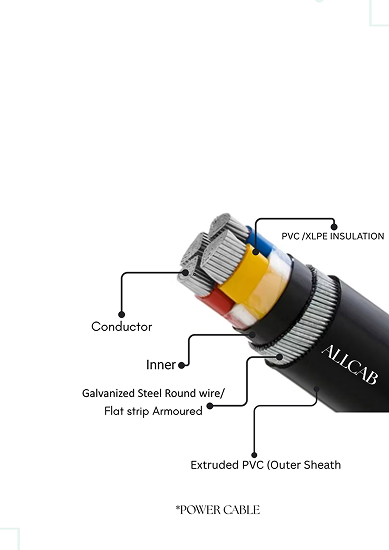
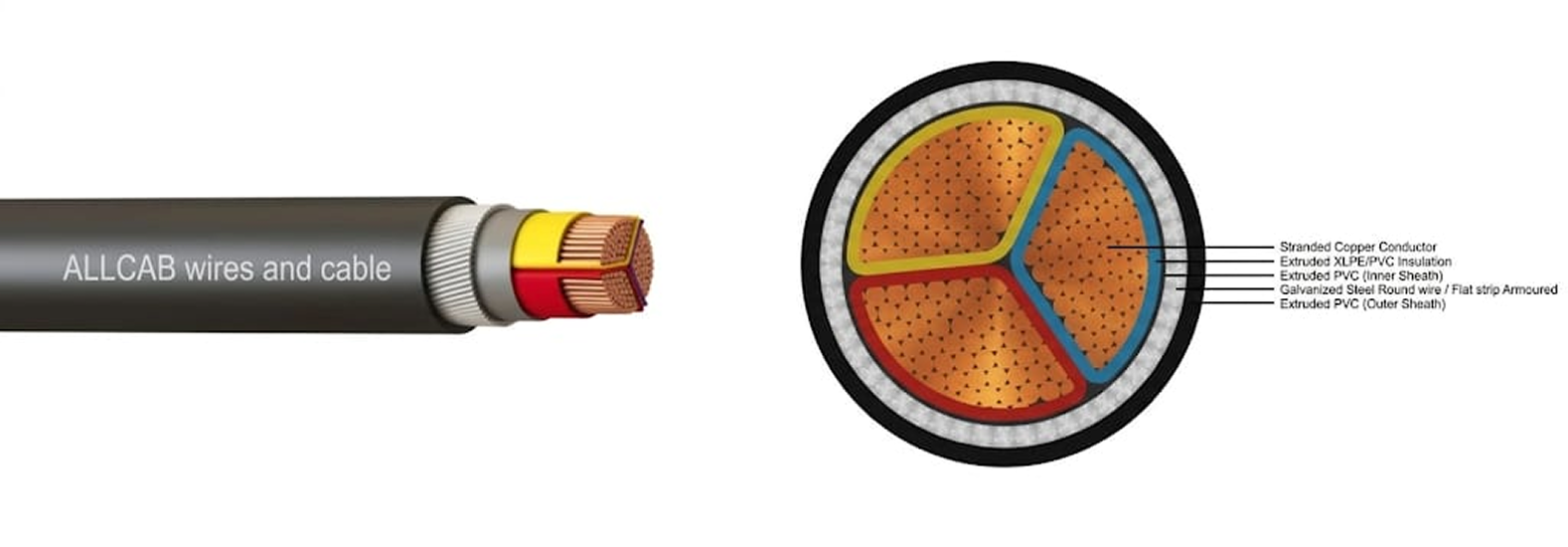
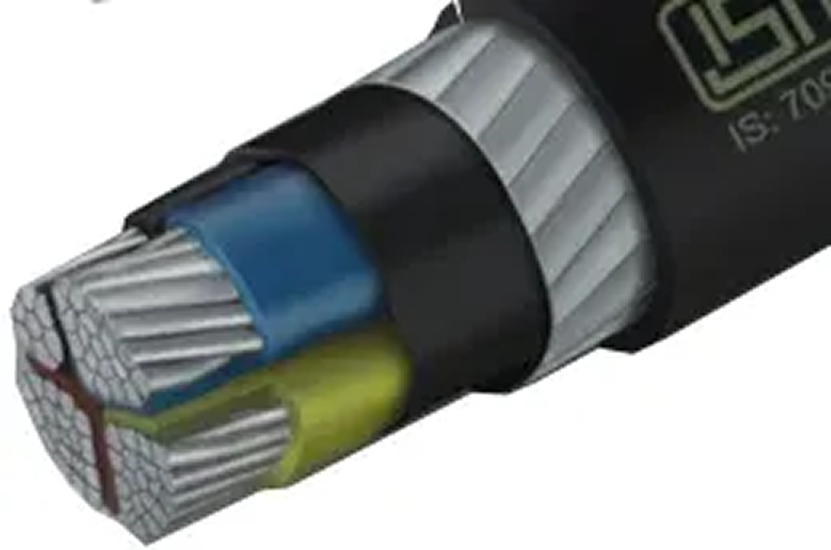
Construction of XLPE Cables

  • Conductor: Copper or aluminium
  • Insulation: Cross-linked Polyethylene (XLPE)
  • Inner Sheath: PVC / LSZH (optional)
  • Armour: Steel wire / strip (optional)
  • Outer Sheath: PVC / FR / FRLS
  • Voltage Grade: Up to 1100 Volts


Applications of XLPE Cables

  • Industrial power distribution
  • Underground installations
  • Power plants and substations
  • Heavy machinery connections
  • Commercial and infrastructure projects

Advantages of XLPE Cables

  • Higher current carrying capacity
  • Better thermal resistance (up to 90°C)
  • Excellent electrical strength
  • Low dielectric losses
  • High short circuit withstand capacity
  • Longer service life

Advantages

  • High reliability and durability
  • Excellent electrical and mechanical strength
  • Heat and flame resistant (PVC / XLPE)
  • Easy installation with colour-coded cores
  • Long service life with minimal maintenance
  • Suitable for harsh industrial environments


XLPE vs PVC Cable Insulation

When selecting the right cable insulation, XLPE (Cross-Linked Polyethylene) and PVC (Polyvinyl Chloride) are two of the most commonly used materials. Each offers distinct advantages depending on the application.

1. Temperature Resistance

  • XLPE: Can withstand higher operating temperatures (typically up to 90°C continuous and higher in short circuits).
  • PVC: Suitable for lower temperature ranges (usually up to 70°C).

2. Electrical Performance

  • XLPE: Excellent dielectric strength and lower electrical losses, making it ideal for high-voltage applications.
  • PVC: Good insulation properties, but not as efficient as XLPE for high-voltage usage.

3. Mechanical Strength

  • XLPE: Superior mechanical strength and resistance to wear and tear.
  • PVC: Moderate mechanical strength, suitable for general-purpose applications.

4. Chemical & Moisture Resistance

  • XLPE: Highly resistant to moisture, chemicals, and environmental stress.
  • PVC: Offers good resistance, but may degrade faster under harsh conditions.

5. Fire Resistance

  • XLPE: Generally less flame-retardant unless specially treated.
  • PVC: Naturally flame-retardant and widely used where fire safety is important.

6. Lifespan

  • XLPE: Longer service life due to better thermal and aging properties.
  • PVC: Shorter lifespan compared to XLPE under similar conditions.

7. Cost

  • XLPE: More expensive due to advanced properties.
  • PVC: More economical and widely used for cost-sensitive projects.
WhatsApp